
Table of Contents
- Introduction: The Cultural Phenomenon of Indian Matka
- The Cotton Exchange Era (1950s – 1961): Where It All Began
- The Earthen Pot Revolution: Kalyanji Bhagat & Worli Matka (1962)
- Ratan Khatri and the Rise of "Old Main Mumbai" (1964)
- The Golden Era of Textile Bombay (1970s – 1980s)
- The 1982 Textile Strike, Decentralization & The 1990s Transition
- The Digital Renaissance: From Physical Chalkboards to Cloud Microservices
- Chronological Evolution Matrix: Six Decades of Matka (1950s – Present)
- Cultural Heritage: Why Main Mumbai Still Commands Deep Reverence
- Summary: Embracing Tradition with Modern Transparency on Rama567
1. Introduction: The Cultural Phenomenon of Indian Matka
In the social history of urban India, few commercial pastimes have exerted as profound a cultural and economic influence as Satta Matka. Far more than a simple lottery or speculative game, Matka was an organic, self-regulating grassroots numbers market that emerged from the working-class soul of post-independence Bombay.
At the very epicentre of this movement stood "Old Main Mumbai"—a market whose names, schedules, and record charts still form the beating heart of today's Main Bazar.
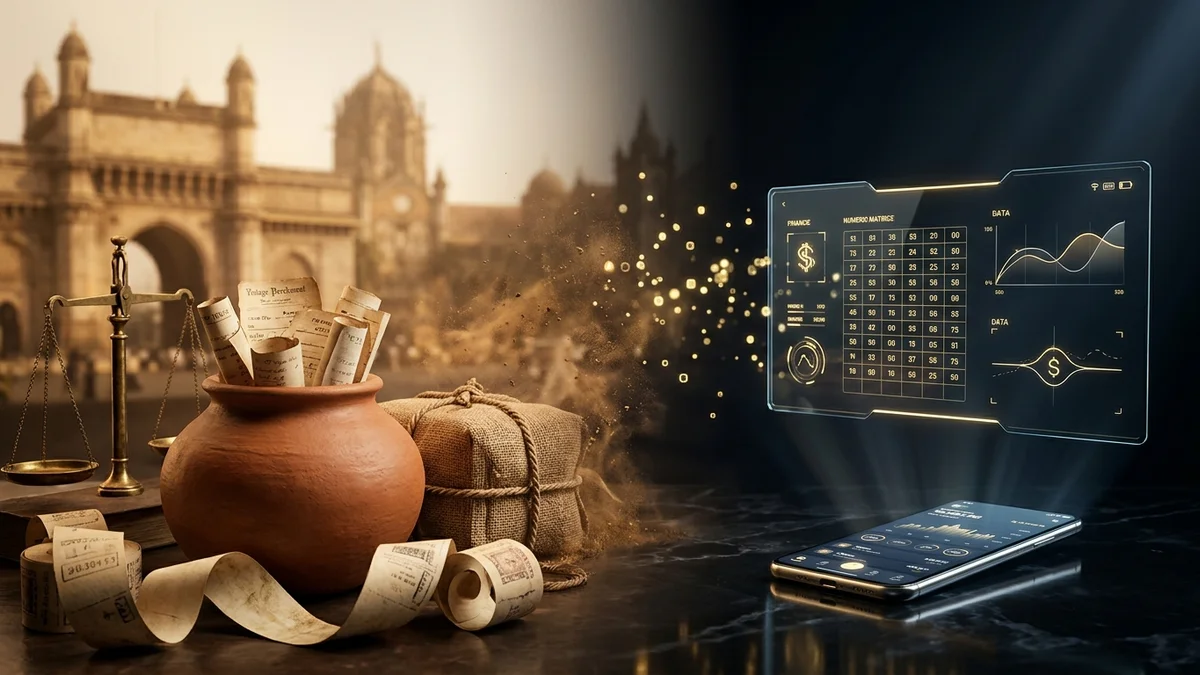
THE SIX-DECADE EVOLUTION OF INDIAN MATKA
- 1950s: NYCE COTTON TELEPRINTERS → Wagering on transatlantic commodity exchange rate spreads
- 1962: THE CLAY MATKA (Kalyanji) → Literal earthenware pot drawing chits in Worli
- 1964: OLD MAIN MUMBAI (Khatri) → 52-card deck system, public draws at Dhanraj Mahal, Colaba
- 1970s: TEXTILE MILL HEYDAY -----→ Girangaon culture, multi-crore daily turnover, printed books
- 1990s: POST-MILL DECENTRALIZATION -> Shift to suburban telephone relays & regional syndicates
- 2020s: RAMA567 DIGITAL REVOLUTION -> Sub-second WebSockets, audited RNG, instant 5-minute UPI
From the bustling cotton godowns of Cotton Green to the teeming textile mills of Parel and Lalbaug, and finally into the palm of modern smartphone users on the Rama567 Android App, Old Main Mumbai has survived political crackdowns, economic transformations, technological revolutions, and urban gentrification.
This comprehensive historical analysis examines the origins, key personalities, structural innovations, and eventual digital renaissance of Old Main Mumbai, providing players with an authoritative understanding of the heritage that underpins modern Indian numbers gaming.
2. The Cotton Exchange Era (1950s – 1961): Where It All Began
To trace the roots of Matka, one must look not to playing cards or lotteries, but to the international cotton commodity markets of the 1950s.
Following Indian independence, Bombay was the undisputed industrial textile capital of South Asia. Raw cotton grown across Maharashtra, Gujarat, and the Deccan was transported to the port of Bombay for ginning, spinning, weaving, and global export.
THE 1950s TRANSATLANTIC COTTON TELEGRAPH LOOP
| Phase / Component | Specifications & Platform Operation |
|---|---|
| — | • [ New York Cotton Exchange (NYCE) ] |
| — | • v (Transatlantic Commercial Cablegram / Teleprinter) |
| — | • [ Reuters / Commercial Telex Terminal, Bombay ] |
| v (Daily Cotton Rates Published | • e.g., 284.50 cents/lb)<br/>• [ Bombay Cotton Exchange, Sewri / Cotton Green ]<br/>• v (Traders and Mill Workers Wager on Last Digits: e.g., '5' and '0')<br/>• [ Bookmakers in Zaveri Bazaar & Kalbadevi ] |
The Teleprinters of Sewri & Cotton Green
In the trading hubs of Kalbadevi, Zaveri Bazaar, and Cotton Green in Sewri, wholesale cotton brokers, commission agents, and mill hands engaged in informal wagering based on the daily fluctuations of world cotton prices.
The benchmark numbers were the Opening and Closing prices of raw cotton per bale transmitted from the New York Cotton Exchange (NYCE) via international teleprinter telegraphs.
- A trader or punter would wager on the terminal digits of the declared rate (for example, if cotton opened at
284.50, the relevant digits might be5and0). - The market operated with rapid fluidity because it relied on an objective, internationally verified data feed that no individual bookmaker in Bombay could tamper with or manipulate.
The 1961 New York Cotton Exchange Ban
The cotton wagering system worked seamlessly for over a decade. However, by 1961, international financial regulators and the management of the New York Cotton Exchange cracked down on speculative rate dissemination used for gambling in foreign ports.
In late 1961, the NYCE formally severed the commercial telegraph feed to unaccredited recipients, abruptly terminating the daily data stream.
Deprived of their foundational numbers, Bombay’s informal bookmakers faced an existential crisis: how could a numbers market function without a trusted, unmanipulated, daily random number source?
3. The Earthen Pot Revolution: Kalyanji Bhagat & Worli Matka (1962)
The crisis of 1961 did not destroy the market; instead, it ignited a brilliant homegrown innovation led by a Kutchi migrant named Kalyanji Bhagat.
Born Kalyanji Kalabhai Gala in the village of Ratnal in Kutch, Gujarat, Bhagat arrived in Bombay as a penniless youth. He worked odd jobs—operating a grocery stall, managing spice sacks, and acting as a small-scale commodity broker near the Worli docks.
THE ORIGINAL 1962 CLAY MATKA SYSTEM
| Phase / Component | Specifications & Platform Operation |
|---|---|
| — | • 1. Large Earthen Clay Pot ("Matka") Placed in Public View in Worli |
| 2. 10 Individual Pieces of Paper Numbered [ 0, 1, 2, 3, 4, 5, 6, 7, 8, 9 ] | • 3. Chits Folded and Dropped into the Pot; Thoroughly Hand-Shuffled<br/>• 4. A Selected Bystander Draws One Chit ---> The "Open" Digit<br/>• 5. Procedure Repeated One Hour Later ---> The "Close" Digit<br/>• HERITAGE BIRTH: The physical pot gave the entire industry its permanent name: MATKA |
The Kutchi Visionary of Worli
Recognizing that the working-class public still craved a daily recreational numbers game, Kalyanji Bhagat devised a mechanical alternative to the banned American telegraphs on May 2, 1962:
- He acquired a traditional Indian earthen clay pot—known in Hindi, Marathi, and Gujarati as a "Matka" (मटका).
- Inside this pot, he placed ten folded chits of paper, inscribed with the digits $0, 1, 2, 3, 4, 5, 6, 7, 8, 9$.
- In front of an assembled crowd of traders and workers at his Worli headquarters, a neutral bystander or child was invited to draw out one chit.
- The drawn number became the official Open Ank. Later in the evening, the process was repeated to declare the Close Ank.
The Mechanics of the Literal Clay "Matka"
Bhagat named his system Worli Matka. His game introduced several historic breakthroughs:
- Mass Accessibility: Unlike cotton futures, which required substantial financial capital, Worli Matka allowed bets as small as 25 paise (1/4th of a rupee), opening the game to dock workers, taxi drivers, and mill laborers.
- Seven-Day Operation: Bhagat operated his draw 7 days a week, offering continuous liquidity.
- The Enduring Name: Although the physical clay pot was later replaced by cards and mechanical drums, the term "Matka" was permanently etched into the cultural consciousness of India.
4. Ratan Khatri and the Rise of "Old Main Mumbai" (1964)
While Kalyanji Bhagat invented the clay pot draw, the man who transformed Matka into a multi-crore national empire with mathematical elegance and supreme organizational discipline was Ratan Khatri.
Originally from Karachi in Sindh, Ratan Khatri migrated to Bombay following the Partition of 1947. Gifted with a brilliant mathematical mind, exceptional interpersonal charisma, and absolute organizational discipline, Khatri initially worked alongside Kalyanji Bhagat in Worli.
However, philosophical and operational differences soon emerged:
- Bhagat preferred a simple, localized game operating seven days a week with modest payouts.
- Khatri envisioned an elite, mathematically rigorous, nationwide numbers exchange with higher payouts, ironclad credibility, and sophisticated syndicate distribution.
In 1964, Khatri amicably parted ways with Bhagat and launched New Worli Matka, which rapidly became known across India simply as "Main Mumbai" (or in historical retrospectives, "Old Main").
RATAN KHATRI'S HISTORIC MAIN MUMBAI MECHANICS
- Headquarters: Dhanraj Mahal, Apollo Bunder, Colaba, South Bombay
- Drawing Engine: 52 Playing Cards (King, Queen, Jack removed; Ace=1, 10=0)
- Cards Drawn: 3 Consecutive Cards Drawn -> Sorted Ascending (Panna)
- Summation Rule: Modulo-10 Digital Sum -> Single Ank
- Schedule: Monday through Saturday (Sunday Closed for System Audit)
- Integrity Standard: Public drawing ceremony in front of independent observers
The Dhanraj Mahal Headquarters
Khatri set up his administrative command center in the prestigious Dhanraj Mahal complex in Apollo Bunder, Colaba—just stones away from the Gateway of India and the Taj Mahal Palace Hotel.
From this opulent South Bombay address, Khatri operated with the professional rigor of a central bank governor. He established nationwide telephone relays, appointed regional syndicate heads in Gujarat, Rajasthan, Punjab, and Karnataka, and enforced strict credit limits.
The 52-Playing-Card Innovation
Khatri’s greatest procedural breakthrough was replacing the primitive clay pot and paper chits with a standard deck of 52 playing cards:
- He took a brand-new, sealed pack of playing cards, unwrapped in front of public witnesses.
- The Court cards (Kings, Queens, Jacks) were removed, leaving 40 number cards (Aces through 10s).
- The cards were thoroughly shuffled and spread out face-down on a polished wooden table.
- Three cards were drawn at random:
- For example: a $4$, an $8$, and an Ace ($1$).
- The three cards were arranged in strict ascending order to create the three-digit Panna (
148). - The values were summed ($1 + 4 + 8 = 13$), and the last digit was dropped to declare the Single Ank ($3$).
This ingenious innovation created the 220-Panna universe and the Jodi bracket system, establishing the universal mathematical framework still used on Rama567 today.
The Standard 6-Day Operating Rhythm
Unlike Bhagat’s 7-day Worli game, Khatri instituted a 6-day operating week (Monday to Saturday), keeping the market closed on Sundays.
This weekly pause served two crucial functions:
- It allowed bookmakers and runners to settle complex inter-city financial ledgers.
- It prevented player burnout, establishing a disciplined operational rhythm that cemented Old Main Mumbai’s status as the gold-standard blue-chip market of Indian gaming.
5. The Golden Era of Textile Bombay (1970s – 1980s)
The 1970s and early 1980s marked the zenith of Old Main Mumbai. The market grew to become an integral component of the economic ecosystem of Bombay.
THE 1970s TEXTILE MILL - MATKA ECONOMIC CYCLE
- [ 250,000+ Textile Mill Workers in Girangaon (Parel, Lalbaug, Byculla, Worli) ]
- +---------------------------+---------------------------+
- v (Shift Ends: 03:30 PM) v (Shift Ends: 10:30 PM)
- [ Wagers Placed on Kalyan Day ] [ Wagers Placed on Old Main ]
- (Draw Declared: 04:10 PM) (Draw Declared: 09:35 PM)
- +---------------------------+---------------------------+
- [ Millions of Rupees Distributed Daily in Micro-Winnings Across Chawls & Cafes ]
- Local tea stalls, Irani cafes, and corner paan shops serve as community hubs
Girangaon: The Mill Village Culture
During this era, central Bombay was dominated by Girangaon (literally, "The Village of Mills"). Over 130 massive textile mills—including Phoenix Mills, Swan Mills, and Bombay Dyeing—employed more than 250,000 workers.
Matka fit naturally into the rhythm of mill life:
- Workers ending their morning shifts at 03:30 PM would gather at Irani cafes and paan stalls along Lalbaug to wager small change on Kalyan Day.
- Evening shift workers finishing their duties at 10:00 PM would converge to hear the declared Open and Close numbers of Main Mumbai.
- For these working-class families, winning a 1:9 Single Ank or a 1:90 Jodi provided essential supplementary income for festival celebrations, children’s school fees, or medical emergencies.
The Multi-Crore Liquidity Machine
By the late 1970s, the daily turnover of Main Mumbai was estimated by financial journalists to exceed ₹50 Crore per week—an astronomical figure for that era, surpassing the trading volumes of several regional stock exchanges.
Khatri’s syndicate employed thousands of young men as runners, writers, bookkeepers, and telephone operators, establishing a parallel informal banking network that operated with astonishing speed and zero bad-debt defaults.
The Birth of the Printed Jodi & Panel Charts
During this golden era, tracking numbers transitioned from chalkboards and verbal memory into formal printed record archives.
- Printing presses in Byculla and Kalbadevi began publishing weekly and monthly "Record Books".
- These publications documented every Single Ank, Jodi bracket, and Panna in precise chronological grids.
- It was during this period that analysts first developed Cut Ank theory, Red Jodi recognition, and family group systems, laying the groundwork for the modern analytical discipline practiced on platforms like Rama567.
6. The 1982 Textile Strike, Decentralization & The 1990s Transition
The golden age of physical Matka came to an abrupt, tragic halt with the Great Bombay Textile Strike of 1982.
Led by labor union leader Datta Samant, over 200,000 mill workers walked out on an indefinite strike demanding wage revisions. The strike dragged on for more than 18 months, ultimately leading to the permanent closure of over 80 mills.
Girangaon was devastated. Hundreds of thousands of mill hands lost their livelihoods and returned to their ancestral villages in Konkan, Satara, and Sangli. The concentrated working-class customer base that had sustained Old Main Mumbai vanished almost overnight.
THE 1980s - 1990s SHIFT: CENTRALIZED TO SUBURBAN
- 1982 Textile Strike: Central Bombay mills shut down; workers migrate to suburbs
- Police & Regulatory Crackdowns: Centralized South Bombay dens forced underground
- Geographic Decentralization: Syndicates relocate to Kalyan, Thane, Pune & Gujarat
- Emergence of Regional Bazars: Time Bazar, Milan Day/Night, Rajdhani Day/Night
Concurrently, law enforcement intensified crackdowns on centralized physical gambling dens across South and Central Bombay. The high-profile public draws at Dhanraj Mahal were discontinued.
Faced with intense scrutiny, the Matka syndicate decentralized:
- Operational hubs shifted northward to suburban satellite cities like Kalyan, Dombivli, and Thane, as well as regional commercial centers like Ahmedabad, Surat, and Goa.
- The market fragmented into independent, regionalized bazars—giving rise to specialized daytime and nighttime schedules like Time Bazar, Milan Day and Milan Night, and Rajdhani Night.
- Old Main Mumbai survived, but it was operated via telephone relays, whispered passwords, and covert paper slips.
7. The Digital Renaissance: From Physical Chalkboards to Cloud Microservices
The early 2000s and 2010s brought the dawn of the internet, but the initial transition of Indian Matka to the digital space was chaotic and riddled with deception.
The Pitfalls of Early Web Aggregators & Pirates
In the early internet era, dozens of unverified third-party websites sprang up claiming to display "Fast Live Results."
In reality, these early portals suffered from severe structural flaws:
- Artificial Lag: Free hosting servers took 5 to 15 minutes to refresh results, causing players to miss betting windows.
- Result Tampering: Rogue website administrators frequently altered past record charts to sell fake "leak predictions."
- Unsecured Payments: Informal bookmakers collected money via cash couriers or personal bank accounts, frequently disappearing when players struck large Sangam jackpots.
THE RAMA567 DIGITAL TRANSFORMATION
| HISTORIC PHYSICAL VULNERABILITY | RAMA567 DIGITAL RESOLUTION |
|---|---|
| :---------------------------------------- | :---------------------------------------- |
| Manual paper chits subject to handling | Cryptographic Random Number Generation |
| Phone delays of 10 to 30 minutes | Sub-second WebSocket live data push |
| Paper charts lost or torn | Permanent, cloud-replicated archives |
| Cash runners prone to theft or default | Instant 5-minute automated UPI settlements |
| Unverified offline bookie deductions | 100% verified zero-commission payouts |
How Rama567 Re-Engineered the Heritage Circuit
Recognizing the need to rescue this historic Indian numbers tradition from bad actors and archaic technology, Rama567 undertook a comprehensive full-stack re-engineering of the entire market ecosystem:
- Audited Cryptographic RNG Systems: Replacing physical slips and card decks with mathematically audited, tamper-proof Random Number Generation (RNG) protocols that guarantee absolute fairness.
- Sub-Second WebSocket Data Pipelines: Instead of slow page reloads, the Rama567 APK pushes declared numbers to hundreds of thousands of concurrent mobile screens within 400 milliseconds.
- Permanent Interactive Chart Databases: Transforming brittle paper record books into searchable, zoomable, high-contrast digital repositories—including the Kalyan Jodi Chart, Supreme Day Chart, and modern Main Bazar Chart.
- Instant Banking Automation: Eliminating unreliable cash bookies entirely. Under our 24/7 Financial Infrastructure, player deposits and winning withdrawals are settled automatically via direct UPI/IMPS gateways in under 5 minutes.
8. Chronological Evolution Matrix: Six Decades of Matka (1950s – Present)
The six-decade journey of Indian Matka from colonial telegraph wires to cloud-native mobile applications is summarized in the matrix below:
| Era | Dominant Era Title | Primary Number Generation Mechanism | Key Pioneer Figures | Iconic Market Anchors | Settlement Infrastructure |
|---|---|---|---|---|---|
| 1950s – 1961 | The Cotton Era | NYCE Transatlantic Teleprinter Telegraphs | Zaveri Bazaar & Sewri cotton brokers | Cotton Opening & Closing Rates | Informal Cash Books & Hawala |
| 1962 – 1963 | The Clay Pot Era | Numbered paper chits drawn from an earthen pot | Kalyanji Bhagat | Worli Matka (7 Days/Week) | Localized neighborhood runners |
| 1964 – 1982 | The Golden Mill Era | 52-Playing-Card Draw (3 Cards ascending) | Ratan Khatri | Old Main Mumbai & Kalyan Day | Centralized syndicates, printed books |
| 1982 – 1999 | The Decentralized Era | Telephone relays, covert regional card draws | Suburban syndicate heads | Main Mumbai, Milan, Kalyan | Decentralized telephone bookmakers |
| 2000s – 2018 | The Early Web Era | SMS alerts, early desktop HTML tables | Web aggregators & forum moderators | Kalyan, Mumbai, Time Bazar | Bank wire transfers & cash pickups |
| 2019 – Present | The Rama567 Cloud Era | Audited Cryptographic RNG & Microservices | Full-stack platform engineers | Main Bazar, Kalyan, Supreme, Sridevi | Instant 5-Minute UPI & IMPS |
9. Cultural Heritage: Why Main Mumbai Still Commands Deep Reverence
Today, when players open the Rama567 application at 09:35 PM to await the Open declaration of Main Bazar, they are participating in an unbroken living tradition that spans over sixty years.
WHY MAIN BAZAR REMAINS UNRIVALED
- 1. THE NOCTURNAL CLOSING BELL:
- Closing at 12: 05 AM, it is the grand finale of the entire daily Matka circuit.
- 2. THE DEEPEST LIQUIDITY POOL:
- Commands the highest concurrent analytical interest across India.
- 3. COMPLETE MATHEMATICAL PURITY:
- Maintains the original 220-Panna matrix and 100-Jodi bracket Cartesian space.
- 4. GENERATIONAL CONTINUITY:
- The same chart principles studied in 1974 are verified and practiced in 2026.
The enduring reverence for Main Mumbai stems from its historical role as the benchmark of integrity. In an era before computers and consumer banking, Ratan Khatri proved that an informal numbers game could be operated with absolute fairness, transparent rules, and prompt financial settlement.
Modern Main Bazar preserves that exact spirit. The late-night draw times (09:35 PM Open – 12:05 AM Close), the classic ascending panel rules, and the mathematical beauty of the Red Jodi pairs all serve as direct homages to the pioneers of Bombay’s industrial past.
10. Summary: Embracing Tradition with Modern Transparency on Rama567
The history of Old Main Mumbai is a testament to human ingenuity, cultural resilience, and the relentless evolution of numbers gaming in India. What began as informal wagers on transatlantic cotton telegraphs in the port godowns of Sewri has evolved into a sleek, secure, cryptographic digital ecosystem.
At Rama567, we are proud to honor this heritage by providing players with the highest standards of technological integrity:
- Verifiable Transparency: Tamper-proof draw declarations synchronized across our real-time network.
- Superior Multipliers: Industry-leading payout rates (1:9.5 for Single Ank, 1:95 for Jodi, up to 1:10,000 for Full Sangam) with zero deductions.
- Rapid Financial Velocity: Automated deposits and withdrawals processed directly via UPI and IMPS in under 5 minutes.
- Uncompromising Player Safety: Robust Gaming Self-Discipline Tools and 24/7 human customer support.
Experience the heritage of Old Main Mumbai reimagined for the modern era. Download the Rama567 Android App today, explore live Historical Record Charts, read our comprehensive How to Play Guide, and take part in India's most celebrated numbers tradition with total peace of mind.