
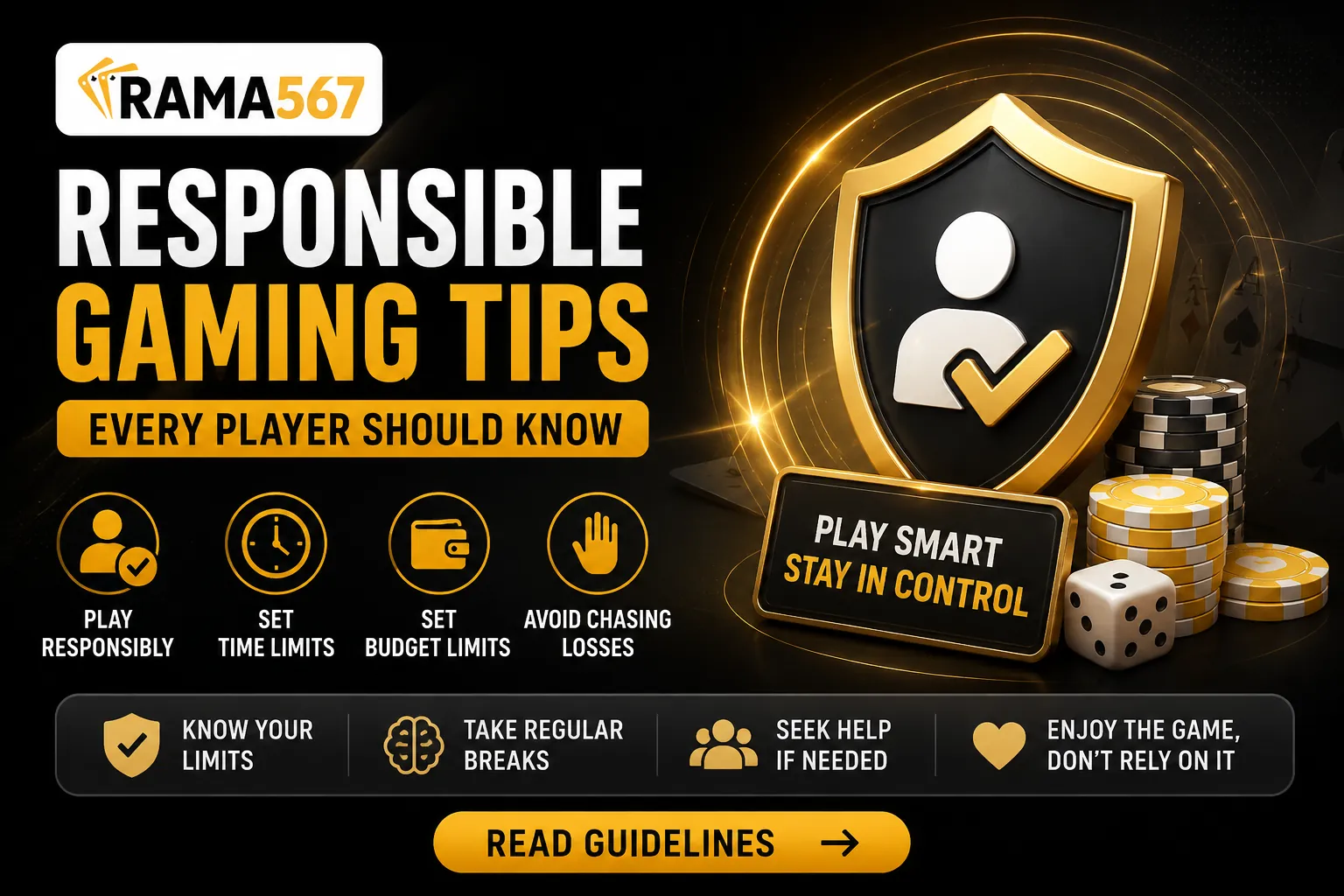
Participating in online environments that involve the risk of chance, risk or financial decisions is a matter of awareness. While online platforms provide entertainment, playing in a manner that isn't clear can cause tension and financial burden. Engaging in Responsible Gaming is keeping the control of your actions throughout the day, taking deliberate decisions and putting your wellbeing over everything else.
Knowing the rules of responsible gambling does not only apply to those with issues, but is an essential skill that every gambler should have right from the start. Gaming is an additional form of entertainment. Gaming shouldn't affect your obligations to yourself or personal relationships, your physical health or your financial health. This guide provides the most effective strategies, limits-setting structures, as well as warning signs to assist you in maintaining safe game-playing routines.
What Is Responsible Gaming?
In plain English, Responsible Gaming refers to the mindset of a person and a series of actions created to make gaming secure in a controlled and balanced manner. This means understanding that the outcomes can be unpredictable, recognizing that there is always a risk of financial loss in play, and treating every game as purely an entertainment option rather than an income-generating source.
Gaming responsibly is about:
- Setting clear boundaries for yourself prior to entering your password.
- Financial allocations must be kept separate from living expenses.
- Exercising emotional discipline in the face of both losses and wins.
- Be aware of when to pause to take a break, move away or to stop.
If you are able to establish responsible behavior, you are in complete charge of your decisions instead of letting momentum, emotions, or luck determine your actions.
Why Responsible Gaming Matters
Engaging in gambling in the absence of a defined personal boundary may have numerous effects. Promoting awareness about gambling can help protect gamblers in many important fields:
- Financial Security: ensuring that funds set aside to pay bills, rent, food, savings or family requirements are not at risk.
- Achieving Emotional Balance: by avoiding extreme worry, tension and mood swings which typically accompany uncontrolled playing.
- Time Management: Keeping track of personal schedules to ensure that studies, work, rest, and commitments to family are not neglected.
- The Early Risk Prevention Program: This program helps athletes recognize problematic patterns earlier, before they become long-term problems.
By focusing on limits and self-control, gamers can safeguard their financial security as well as their general security.
8 Responsible Gaming Tips Every Player Should Know
Developing responsible player habits requires proactive effort. Here are eight sensible gambling tips that everyone is expected to follow regularly.
1. Set a Budget Before Playing
Find out the exact amount that you can afford to spend on entertainment prior to deciding whether you want to start. Think of this amount as an expense for admission to a cinema or dining out, which is money that you use for entertainment only.
- An example of a practical scenario: If your entertainment expenditure is $500, after you've used that amount, then you can stop the remainder of the month regardless of how it turns out.
2. Never Use Essential Funds
Use only discretionary funds you are able to afford losing and not altering your lifestyle. Don't touch the money you have allocated to important expenditures.
- An example of practicality: Put your money from gaming in a separate bank account, or a sub-account that is completely separated from the main bank account, which is used to pay for grocery shopping and rent.
3. Establish Firm Time Limits
Determine in advance what number of hours or minutes you'll spend on the internet. It's difficult to keep track of how long you spend on your display.
- An example of a practical use: set the timer of your smartphone to run for 30 mins. After the alarm is sounded, you must log off the phone immediately, with no extension.
4. Take Regular Breaks
The constant play of your life can dull your senses and cause decision-making on impulse. Removing yourself from the game helps to gain perspective and resets your mind.
- An example of a practical approach: Force the non-negotiable requirement of a 10-minute break every 20 minutes of vigorous period to get up, stretch and sip water.
5. Avoid Chasing Losses
The idea of recouping money lost with a longer playing time or higher stakes is among the fastest ways to suffer serious financial difficulties. For a better chance of avoiding losses be aware that losing money is an integral aspect of playing risk-based games.
- An example of a practical scenario: In the event that you reach your budget during the session following losing, shut down your browser or app immediately. Don't increase your spending just in order to "get even."
6. Avoid Playing When Emotionally Upset
Don't log into your account when you're feeling anxious, sad, lonely, insecure, or feeling intoxicated by alcohol. The emotional vulnerability of your mind can cloud judgment, and reduces your resistance to impulse-driven behavior.
- A practical example: If you've had an uneasy day at work, you can choose an exercise like a movie or a time to spend with friends and unwind, instead of entering the gaming console.
7. Keep Track of Time and Spending
Make sure you keep a precise track of the amount of dollars and hours you've spent in a given week or month. A regular review helps you stay open about the actual activities you engage in.
- An example of practical use: Use a spreadsheet or notepad for recording the time, date as well as the exact amount of money given after each session.
8. Understand That Outcomes Are Uncertain
Be aware that no casino game can guarantee profits. Don't rely on any systems, strategies, methods, or forecasts for securing income.
- A practical example: Remember, before starting your project, that no formula guarantees success; however, the final results are always beyond your control.
Common Warning Signs of Unhealthy Gaming
Habits that cause problems are rarely formed in a single day. They tend to develop over time. Being aware of these warning signs in the early stages will allow you to get back in control of your situation before any serious damage occurs:
- Exceeding the Limits of Planned Use: Constantly making more purchases or being on the internet for longer periods than planned.
- Afraid of losing money: A strong desire to immediately return to recover the funds you've lost.
- Secrets and Cover-ups: lying to your family, friends or your partner about how much money or time used.
- Not paying attention to daily obligations: missing deadlines for work, skipping classes or delaying household obligations to keep at home.
- Credit Card Loans: You can take out credit card loans or ask your friends for cash to pay for playing or to cover savings that are lost.
- Stress: Feeling intense feelings of guilt, irritability or mood swings you are not playing, or trying to put an end to.
Responsible Gaming vs. Risky Gaming
Making comparisons between healthy and risky ones makes it simpler to assess your own choices.
| Feature | Responsible Gaming | Risky Gaming |
|---|---|---|
| Budgeting | Establishes and adheres to a stringent budget | The spending goes beyond the limits of what was planned. |
| Time Management | Establishes timers and also takes periodic breaks | It can go on for hours and never stops. |
| Handling Losses | Takes on losses for entertainment costs | Losses are incurred in a chase to obtain money to be repaid |
| Financial Source | Uses surplus discretionary money | Utilizes funds that are essential or borrows cash |
| Daily Life Integration | Manages family and work as well as hobbies | Does not pay attention to personal responsibility |
| Emotional Control | You can easily log off anytime | Isn't able or angry trying to end |
How to Create Personal Gaming Limits
Setting personal limits on gaming does not have to be difficult. Follow this easy 5-step guideline to create a secure limit system for your gaming:
| Personal Limit Framework | Description |
|---|---|
| 1. DEFINE BUDGET | Make sure to use any surplus income |
| 2. SET TIME CAP | Session limits (e.g. 30 mins, etc.) |
| 3. ISOLATE FUNDS | Make sure you separate entertainment funds from your bills. |
| 4. STOP AT LIMIT | Stop immediately when your limit is reached |
| 5. AUDIT MONTHLY | Re-read logs to verify the consistency |
- Determine Your Monthly Limit: Consider your income per month, minus the important expenses and savings. You should allocate only a tiny portion of the remaining money for leisure games.
- Cap Your Session Length: Assign a strict maximum time frame per session (e.g., 30 minutes per day, maximum 2 days per week).
- To limit your spending: Choose an exclusive payment method that is restricted to a certain limit in order to stop accidental overspending.
- Forcing Hard Stops: Make a commitment to close the program in the event that your limit on time or the spending limit has been reached, or both come first.
- Review Your Habits: Every Month Check your journal each month. If you see a tendency towards exceeding your limits, reduce the limits or schedule an extended break.
What to Do If Gaming Becomes Difficult to Control
If you notice that establishing limitations isn't working anymore or if controlling your online time feels stressful, addressing the issue immediately is vital. Being aware that you are in need of support is an act of courage and accountability.
Below are suggested steps for regaining balance
- Make an immediate break: Institute a mandatory 30-day break from all platforms to let your thoughts rest and assess your relationships with gaming.
- Connect with a trusted person: Talk about your emotions and your situation with your family member, intimate friend, or someone you trust to provide impartial accountability that is not based on judgment.
- Use Self-Exclusion Tools: A lot of platforms have features to account for which permit users to temporarily suspend or completely block their access.
- Get Professional Help: Contact local mental health counselors, specialists, or dedicated help groups that focus on behavioral boundaries and financial recovery.
Responsible Gaming Checklist
Check this checklist prior to and after any activity to ensure that your practices are safe
- Do I have an enforceable monetary threshold that is only based on discretionary funds?
- Do I have an alarm that is clear for this session?
- Have all of my necessary bills, job tasks, and family obligations been taken care of?
- Am I well-behaved, sober and in a calm emotional state?
- Do I feel ready to be able to bear a full reduction in my session budget without having to chase it?
- Do I have the time to quit immediately once my budget or time limit is met?
Engaging in Responsible Gaming requires awareness of yourself, personal boundaries, well-controlled decisions, and maintaining complete control of your surroundings. The idea of viewing gaming solely as a small kind of recreation, and ensuring your money, time, as well as your mental health, ensures it will not become a detrimental influence in your life.
Keep your priorities straight
Your health, family and the financial health of your family must always come first. To learn more about education and gaming guidelines, go to Rama 567.
Conclusion
Practicing responsible gaming is fundamental to maintaining personal control, financial security, and emotional peace of mind. By setting clear monetary and time budgets before logging on, treating gaming strictly as entertainment rather than a source of income, avoiding the impulse to chase losses, and taking frequent breaks, players can ensure that their online habits remain safe and balanced.
Recognizing early warning signs of problematic behavior and understanding that every outcome involves inherent uncertainty allows individuals to protect their daily routines and essential living expenses. Always keep your personal obligations, work, health, and family at the top of your priorities, and remember that seeking assistance is always a positive, responsible decision whenever limits become difficult to manage.
1. What is responsible gambling?
Responsible gaming refers to a collection of rules, practices and boundaries that aim to make sure that gaming remains secure and under control. This means treating gaming solely as a form of entertainment, having rigid time and financial budgets and recognizing financial risks while avoiding losses-chasing and making sure that gaming does not interfere with your personal commitments or your health.
2. How important is responsible gaming?
This is crucial because unsupervised gambling comes with inherent financial, psychological, and social risk. Self-control training prevents spending, which reduces anxiety and stress as well as protects your relationships. It also makes sure that gaming does not interfere with the essential expenses of living and employment or well-being.
3. How do I establish the gaming budget?
It is possible to establish a gaming budget by taking your income for the month and deducting the essential costs like food, rent, bills as well as savings. Only allocate a tiny amount of the remaining discretionary money to gaming and do not exceed the amount in any way.
4. What are the reasons why players should not chase losing money?
It is best not to chase losing money because trying to recuperate losses by playing for a longer time or committing to spending more can increase the chance of financial losses and cause serious distress. The outcome is uncertain and spending more money when losing sessions often leads to even more loss totals.
5. What can I do if I'm not able to control my game?
If you are unable to manage your game, get off immediately and make an extended stop. Talk to your trusted close friend or family member, use self-exclusion features on platforms and seek out counselors who are professionals or support groups in your area to get help.